
Holy (42)

the Holy Spirit, who gave the Scriptures, is Himself the perpetual author (auctor perpetuus) of all appropriations of their contents by and of all application to the individual. It is the Holy Spirit who, by illumination, enables the human consciousness to take up into itself the substance of the Scripture; in the course of ages leads our human consciousness to ever richer insights into its content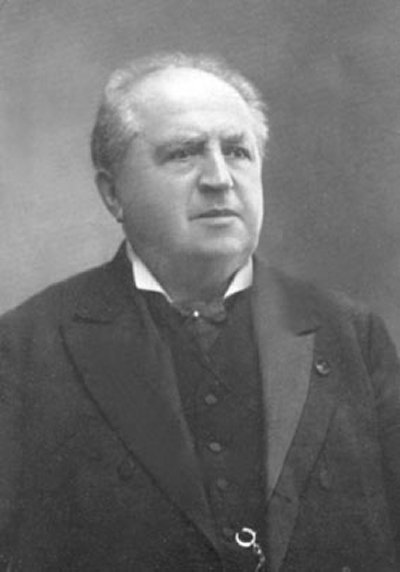
Abraham Kuyper
Principles of Sacred Theology, 402With a perversity as pathetic as it is impoverishing, we have become preoccupied today with the extraordinary, sporadic, non-universal ministries of the Spirit to the neglect of the ordinary, general ones.
Knowing God (The Love of God, 130)Holy Spirit0Knowing God (The Love of God, 130)
Today the doctrine of the Holy Spirit's personal divinity is seldom given much attention. Books about him tend to gloss over who he is and concentrate almost entirely on what he does. This is a pity, because the works of the Holy Spirit cannot be understood unless his divine personhood is acknowledged.
God Has Spoken (725)Holy Spirit0God Has Spoken (725)
The Spirit and the Word must be combined. If I look to the Spirit alone without the Word, I lay myself open to great delusions also. If the Holy Ghost guides us at all, He will do it according to the Scriptures and never contrary to them.
Answers to Prayer (11)Holy Spirit0Answers to Prayer (11)
God gave the Spirit to the rest of the apostles, but he gave the purse to the son of perdition.
Money, Holy Spirit0Your flesh is a square peg, and the Spirit is a round hole. The two don't go together!
Holy Spirit0the notion that the Spirit of God is the rule of life for the believer, mistakes the power for life with the rule of life.
https://www.youtube.com/watch?v=H9GA6bLUhhgHoly Spirit, The Law0"concursive operation."... It has been common to speak of the Spirit's action in this form of revelation, therefore, as an assistance, a superintendence, a direction, a control, the meaning being that the effect aimed at --the discovery and enunciation of Divine truth --is attained through the action of the human powers --historical research, logical reasoning, ethical thought, religious aspiration --acting not by themselves, however, but under the prevailing assistance, superintendence, direction, control of the Divine Spirit.
Inspiration and Authority of the Bible, Ch 1Revelation, Reason, Holy Spirit0Inspiration and Authority of the Bible, Ch 1
If the Holy Spirit is the Spirit of the Son, why should we not believe that he proceeds from the Son? Indeed, if he did not proceed from the Son, Christ would not have breathed on his disciples after the resurrection and said, "Receive the Holy Spirit." What else did such breathing mean than that the Holy Spirit also proceeds from the Son?
Tractatus in Iohannis Evangelium 99.6Filioque, Holy Spirit0Tractatus in Iohannis Evangelium 99.6
The operation of the Spirit in believers, the communion of the Holy Ghost, is a great mystery. He works more on them than they feel and know; and they feel more than they can express in words; and they express more than any that have not received "the same spirit of faith" (2 Cor. 4:13) can understand. But this we know, that whenever the Spirit of Christ applies His grace and power to the heart of a sinner, there is something wrought that day which shall last to eternity. There is, by this finger of God, that impression made upon the soul and that mark left upon it that shall never wear out and that sin and Satan shall never be able to blot out again, but it shall remain and grow and be seen at the coming of Christ at the last day (Phil. 1:6).
Holy Spirit0The Holy Spirit is often moving in the consciences and affections of carnal creatures, counseling, rebuking, and exciting them, so that upon His suggestions, some warm affections are raised in them to that which is good, but presently all is quashed and comes to nothing and the Spirit driven away by the entertainment He finds. Again, you cannot know by the common gifts of the Spirit— illumination, conviction, restraining grace, and assistance to perform the external part of religious duties; these are gifts of the Spirit, but such as do not prove he hath the Spirit that hath them. These gifts are beamed from the Spirit of God and show that the kingdom of God is come nigh such an one, but they do not demonstrate that God is come into that soul and hath taken possession of it for His temple.
Holy Spirit0The Holy Spirit who is given to work grace in us, He is also given to witness grace unto us and to make us "know the things that are freely given to us of God" (1 Cor. 2:12). He is a free and sovereign agent indeed, and He works and witnesses in them in whom He worketh as He pleases. He giveth assurance of peace with God as much as He pleases and as soon, and no more and no sooner, than He pleases (1 Cor. 12:11).
Holy Spirit0But how shall I know the witness of the Spirit from a delusion? Answer: The Spirit of God always witnesses according to the word, as the echo answers the voice. Enthusiasts speak much of the Spirit, but they leave the word. That inspiration which is either without the word or against it is an imposture. The Spirit of God did indite the word (2 Peter 1:21). Now if the Spirit should witness otherwise than according to the word, the Spirit should be divided against itself; it should be a spirit of contradiction, witnessing one thing for a truth in the word and another thing different from it in a man's conscience.
Holy Spirit0If we desire the Spirit, we must wait in the way of duty, as the apostles waited many days before the Comforter came. We must also empty our souls of self-love and the love of the world and willingly entertain those crosses that bring our souls out of love with it. The children of Israel in the wilderness had not the manna till they had spent their onions and garlic; so this world must be out of request with us before we can be truly spiritual. Through grace, labor to see the excellency of spiritual things. How despicable then must all the glory of the world appear! These things, duly considered, will raise our desires more and more toward spiritual and heavenly objects.
Holy Spirit0If we cannot endure the Spirit going up and down with a candle and lantern to search our hearts, how can we abide the day of Christ's coming and stand when the Sun of Righteousness shall appear, for He is like refiner's fire and like fuller's soap? Justice, humility, repentance, though now they be but poor and low things with man, yet when the judge shall take the bench more visibly, how high will they be with God? Sincerity, though it be a silent grace at this time and dwells in obscurity, ere long, I hope, will carry the day and bear away the bell.
Holy Spirit0The Spirit exactly knows the heart of God to the creature, with all His counsels and purposes concerning Him: the Spirit searches all things, the deep things of God (1 Cor. 2:10). And what are those deep things of God the apostle means but the counsels of love which lie deep in His heart, till the Spirit draws them forth and acquaints the creature with them, as appears by verse 9? And also He knows the whole frame of man's heart. It were strange if He that made the cabinet should not know every secret box in it.
Holy Spirit0All the doctrine of the Scriptures may be briefly referred to these two heads: first, how we may be prepared to receive the Spirit of God; secondly, how the Spirit may be retained when we have once received it.
Holy Spirit0The supreme work of the Holy Spirit is to focus attention on, and to point to, the Lord Jesus Christ.
Holy Spirit0 For the Father works all things by the Spirit. By him God creates, sustains, moves, gives life, strengthens, and preserves all things. By the self-same Spirit, he regenerates his faithful people, sanctifies them, and endues them with diverse kinds of graces. Thus, in the description of him mentioned above, his principal powers and effects which show themselves by their working in men, are comprised in four members. I said that he illuminates, regenerates, sanctifies, and fulfils the faithful with all good graces.
The Decades, https://www.monergism.com/decades-ebookHoly Spirit0The Decades, https://www.monergism.com/decades-ebook
the Holy Ghost in man increases or fills, and diminishes or departs: not that there is any change to be found in God (who, as commonly and truly said, neither receives more or less); but because man, according to his capacity, either receives the Spirit plentifully and liberally, or else measurably and sparingly, even as it pleases the Holy Ghost.
The Decades, https://www.monergism.com/decades-ebookHoly Spirit0The Decades, https://www.monergism.com/decades-ebook
The Holy Ghost is the third person in Trinity, to be worshipped, very God, proceeding from the Father and the Son. He enlightens, regenerates, sanctifies, and fulfills the faithful with all good graces.
The Decades, https://www.monergism.com/decades-ebookHoly Spirit0The Decades, https://www.monergism.com/decades-ebook
We must pray continually, that the bountiful and liberal Lord will grant to bestow on us his Spirit, that by it the seed of God's word may be quickened in our hearts, and that we, as holy and right hearers of his word, may bear fruit abundantly to the glory of God, and the everlasting salvation of our own souls. For what will it avail to hear the word of God without faith, and without the Holy Spirit of God to work or stir inwardly in our hearts?
The Decades, https://www.monergism.com/decades-ebookScripture, Holy Spirit, Salvation0The Decades, https://www.monergism.com/decades-ebook
Anti-intellectualism and the fullness of the Spirit are mutually incompatible, because the Holy Spirit is the Spirit of truth.
Holy Spirit, Truth0Can he who finds no pleasure in the company of spiritually-minded persons, or even sneers at them as saints,-can he be said to "have the Spirit"? Judge for yourself.
Old Paths, Chapter XHoly Spirit, Company, Church, Mean Christians0Old Paths, Chapter X
the Holy Ghost generally works on the heart of man through the use of means. The Word of God, preached or read, is generally employed by Him as an instrument in the conversion of a soul. He applies that Word to the conscience: He brings that Word home to the mind. This is His general course of procedure.
Old Paths, Chapter XHoly Spirit0Old Paths, Chapter X
We cannot explain how and in what way the Almighty Spirit comes into man, and operates upon him; but neither also can we explain a thousand things which are continually taking place in the natural world.
Old Paths, Chapter XHoly Spirit0Old Paths, Chapter X
only by the Spirit can a person think rightly of the One to whom he prays. They then, not being able to conceive aright of God to whom they pray, of Christ through whom they pray ... how shall they be able to address themselves
to God, without the Spirit help this infirmity?
Prayer, Holy Spirit0The problem we face is that the word holy is foreign to all languages. No dictionary is adequate to the task.
Holiness, Holy0There is no way of deliverance from the state and condition of being in the flesh, but by the Spirit of Christ.
Holy Spirit, Regeneration0Put simply, in the Bible the Spirit is never the object of worship.
For the Glory of God, 50Holy Spirit, Prayer0For the Glory of God, 50
Fee rightly notes that the "demonstration of the Spirit and power" here cannot be taken as a reference to miracles since in the context of 1 Corinthians this is the very triumphalist assumption Paul is arguing against. In contrast to Jewish requests for signs and Greek desire for wisdom Paul preaches Christ crucified (cf. 1:22f). It would thus be a little odd, as Fee notes, if Paul were to appeal to powerful signs and wonders that persuaded hearers! In the context of his own personal weakness, the demonstration of the Spirit's power is seen in the Corinthians' conversion, as the Spirit applies the word of the gospel, Christ and him crucified, to their hearts: "the evidence lies with the Corinthians themselves and their own experience of the Spirit as they responded to the message of the gospel." The plural of power would have been a more unambiguous reference to miracles. Power here is about moral conviction, not miraculous display.
Pillar CommentaryHoly Spirit, 1 Corinthians0Pillar Commentary
Instead of "enticing, clever words" (Thiselton) to win his audience, what accompanied Paul's preaching was a demonstration of the Spirit's power. "A demonstration of the Spirit and of power" (NRSV, NASB), to translate literally, has been understood by the TNIV as a hendiadys, a figure of speech in which two words connected by "and" express a single idea. An example in current English is the phrase, "nice and warm." Fee supplies the validation for taking "Spirit" and "power" together here: "for Paul the terms 'Spirit' and 'power' are at times nearly interchangeable; to speak of the Spirit is to speak of power."
Pillar CommentaryHoly Spirit, 1 Corinthians0Pillar Commentary
The term hagios taps into an important Old Testament tradition, according to which Israel was called out from among the nations to be God's own people (see esp. Exod. 19:6; Dan. 7:18, 22, 25, 27). Some of the modern translations seek to capture this nuance by translating God's holy people (TNIV; NLT) instead of the traditional "saints." As Moule remarks, "Â 'Saint' is, to modern ears, misleading, for the Hebrew and Greek words are concerned less with any excellence of character (however much that may be implied as a result) than with the commitments and loyalties of the Church to the God who had made her his own."
Moo, D. J. (2008). The letters to the Colossians and to Philemon (p. 78). Grand Rapids, MI: William B. Eerdmans Pub. Co.Saints, Holy0Moo, D. J. (2008). The letters to the Colossians and to Philemon (p. 78). Grand Rapids, MI: William B. Eerdmans Pub. Co.
When we read Scripture, the focus will be on God the Father or Jesus Christ the Son. However, it seems that the Holy Spirit is most honored when we accept his conviction of sin, his transforming and sanctifying work within us, and his guidance in life and ministry, and when in response to his leading we prostrate ourselves before Jesus... trinitarian worship need not be balanced, if by balanced we mean giving the three persons of the Godhead equal time and space. True Christian worship focuses particularly on Christ
For the Glory of God (53)Holy Spirit0For the Glory of God (53)
One of the persistent criticisms made by Western theologians of Eastern Orthodoxy is that it tends to put too much emphasis on the limitations of creaturely finitude as the cause of mankind's alienation from God and not enough emphasis on sin and disobedience. This kind of imbalance is not possible if the Holy Spirit is thought to proceed from the Son as well as from the Father, because then the Son's redemptive work is just as important to the Spirit's mission as the original creation is.
God Has Spoken (726)Eastern Orthodox, Holy Spirit0God Has Spoken (726)
[John 15:26] Jesus says this because it accords with his general practice of referring everything he has to the one from whom he has. Compare the place where he says, "My teaching is not mine but his that sent me." If the teaching that he says was his Father's and not his own was actually his as well, how much more does the Holy Spirit proceed from him, just as he proceeds from the Father. The one from whom the Son receives his Godhead is the one from whom he can claim that the Holy Spirit proceeds.
Tractatus in Iohannis Evangelium 99.7Filioque, Holy Spirit0Tractatus in Iohannis Evangelium 99.7
Is receiving from the Son the same thing as proceeding from the Father? If we have to maintain that there is a difference between these two things, then at least we must admit that receiving from the Son is the same thing as receiving from the Father. The Lord declares: "He will take what is mine and declare it to you. All that the Father has is mine; therefore... he will take what is mine and declare it to you." Whatever the Spirit receives, whether it is power, strength, or doctrine, the Son says will be taken from him. He lets it be understood that it will also be taken from the Father, because whatever the Father has is his.
De Trinitate 8.20Filioque, Holy Spirit0De Trinitate 8.20
John of Damascus still spoke of the Father as the source of the Godhead, and represents the Spirit as proceeding from the Father through the Logos. This is still a relic of Greek subordinationism. The East never adopted the 'filioque' of the Synod of Toledo. It was the rock of which the East and the West split.
The History of Christian Doctrines (92)Holy Spirit, Trinity, Filioque0The History of Christian Doctrines (92)
The Cappadocians followed in the footsteps of Athanasius and vigorously maintained the homoousis of the Holy Spirit. Hilary of Poitiers in the West held that the Holy Spirit, as searching the deep things of God, could not be foreign to the divine essence.
The History of Christian Doctrines (90)Holy Spirit, Trinity, Homoousios0The History of Christian Doctrines (90)
As in sanctification you are made to err in this way from time to time with respect to the Holy Scripture, you may be led to doubt, and even for a while pursue wrong paths. But this will not be permanent. The work of grace is not left to yourself, but with a firm hand is guided by the Holy Spirit, who in no mechanical way, but by a richer spiritual experience, at length restores you to seeing again what is truly Divine.
Sacred Theology, 559Sanctification, Holy Spirit0Sacred Theology, 559
What the Holy Spirit personally does, is to direct faith to the revealed knowledge of God, to explain and apply this revealed knowledge of God to the heart according to its particular need, and also to quicken in the soul a lively sense of truth; but along this individual way He does not impart an increase of content.
Principles of Sacred Theology, 351Holy Spirit0Principles of Sacred Theology, 351
The presence of the Holy Spirit within us reminds us of our sonship, yes, our adult sonship. We are not infants, the very term means that we are grown sons and have reached full age. We are sons in the fullest sense and in the possession of all our faculties. The clear realization of this gets rid of the spirit of bondage again to fear.
Spiritual Depression (172)Holy Spirit0Spiritual Depression (172)
Get notified when new 'Holy' quotes come out?
Bible Resource
WhoWhatWhere Bible
A level-based Bible challenge, single and multiplayer modes available.
WhoWhatWhere Bible
A level-based Bible challenge, single and multiplayer modes available.
 Special Offer
Top Authors
1. Thomas Watson (196)
2. Charles Spurgeon (135)
3. J.C. Ryle (117)
4. Thomas Brooks (114)
5. John Calvin (108)
6. John Flavel (96)
7. J.I. Packer (95)
8. William Gurnall (93)
9. George Swinnock (89)
10. John Piper (87)
11. John Owen (74)
12. Thomas Manton (70)
13. A.W. Pink (68)
14. Louis Berkhof (63)
15. C.S. Lewis (59)
16. B.B. Warfield (59)
17. Martyn Lloyd-Jones (58)
18. R.C. Sproul (55)
19. Richard Baxter (54)
20. Matthew Henry (54)
2. Charles Spurgeon (135)
3. J.C. Ryle (117)
4. Thomas Brooks (114)
5. John Calvin (108)
6. John Flavel (96)
7. J.I. Packer (95)
8. William Gurnall (93)
9. George Swinnock (89)
10. John Piper (87)
11. John Owen (74)
12. Thomas Manton (70)
13. A.W. Pink (68)
14. Louis Berkhof (63)
15. C.S. Lewis (59)
16. B.B. Warfield (59)
17. Martyn Lloyd-Jones (58)
18. R.C. Sproul (55)
19. Richard Baxter (54)
20. Matthew Henry (54)
Top Topics
1. Sin (243)2. Prayer (187)
3. Scripture (167)
4. Faith (136)
5. Preaching (130)
6. Gospel (112)
7. The Law (111)
8. Suffering (104)
9. Salvation (96)
10. Sabbath (91)
11. Church (86)
12. Christ (82)
13. Grace (74)
14. Justification (64)
15. Law (61)
16. Truth (53)
17. Death (52)
18. Love (51)
19. Holiness (49)
20. Sanctification (48)
21. Children (46)
22. Pride (46)
23. Heaven (45)
24. Obedience (45)
25. Creation (43)
26. Theology (43)