
Quote 4769

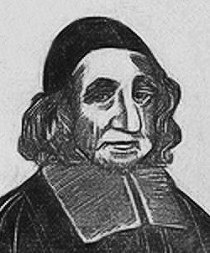
Other Quotes from the Author & Topic
The damned shall live as long in hell as God himself shall live in heaven.
Heaven, Hell0Pirates do not use to set upon poor empty vessels; and beggars need not fear the thief. Those that have most of God, and are most rich in grace— shall be most assaulted by Satan, who is the greatest and craftiest pirate in the world.
Satan, Spiritual Warfare0God will have nothing to do with proud persons, he will never dwell with them, he will never keep house with them.
He that dwells in the highest heavens, will never dwell in a haughty heart.
Pride0A family without prayer is like a house without a roof, open and exposed to all the storms of heaven.
Family Worship0Oh, then be ashamed, Christians, that worldlings are more studious and industrious to make sure of pebbles, than you are to make sure of pearls.
Study, Scripture, Thinking0There are none that walk so close with God all the six days, as those that keep closest to God on the seventh day.
Sabbath, Daily Walk0For a close, remember this, that your life is short, your duties many, your assistance great, and your reward sure; therefore faint not, hold on and hold up, in ways of well-doing, and heaven shall make amends for all!
Precious Remedies Against Satan's DevicesEndurance, Eternity0Precious Remedies Against Satan's Devices
There are many now in hell who have had a great confidence of going to heaven.
Heaven, Hell0Sin always dies most where faith lives most. The most believing soul is the most mortified soul.
Sin, Faith0The least sin is contrary to the law of God, the nature of God, the being of God, and the glory of God
Sin0Sin so bewitches the soul, that it makes the soul call evil good, and good evil; bitter sweet and sweet bitter, light darkness and darkness light
Sin0The main reason why men dote upon the world, and damn their souls to get the world, is, because they are not acquainted with a greater glory!
Precious Remedies Against Satan's DevicesWorldliness0Precious Remedies Against Satan's Devices
Afflictions are God's furnace, by which he cleanses his people from their dross. Affliction is a fire to purge out our dross, and to make virtue shine. Afflictions are medicines which heal soul diseases, better than all the remedies of physicians.
Precious Remedies Against Satan's DevicesSuffering, Affliction1Precious Remedies Against Satan's Devices
It is a God-like thing, though we are wronged by others, yet to be the first in seeking after peace.
Peace0When the sword is in the scabbard, the traveler is easily surprised; and when the guard is asleep, the city is quickly conquered. The strongest creature, the lion, and the wisest creature, the serpent, if they be dormant, are as easily surprised as the weakest worms. So the strongest and wisest saints, if their graces be asleep, if they be only in the habit and not in the exercise, may be as easily surprised and vanquished as the weakest Christians in all the world, as you may see in David, Solomon, Samson, Peter. Every enemy insults over him that has lost the use of his weapons.
Spiritual Warfare0A humble soul being once in a great conflict with Satan said thus to him: "Satan, reason not with me—I am but weak. If thou hast anything to say, say it to Christ; He is my advocate, my strength, and my Redeemer, and He shall plead for me." A humble soul is good at turning Satan over to the Lord Jesus, and this increases Satan's hell.
Spiritual Warfare0Israel going into Egypt had no opposition, but traveling into Canaan, they were never free.
Spiritual Warfare0True repentance includes a sense of the mischievousness of sin: that it cast angels out of heaven, Adam out of Paradise; that it laid the first cornerstone in hell and brought in all the curses, crosses, and miseries that are in the world; and that it renders men liable to all temporal, spiritual, and eternal wrath; yea, it hath left men without God, Christ, hope, or heaven.
Sin, Repentance0As he cannot be wise who speaks much, so he cannot be known for a fool that says nothing.
Silence0No godly man falls in any common calamity till his glass be run and his work done; so I say of all those dear servants of the Lord that have fallen by the pestilence in the midst of us. Their hour was come and their course was finished. Had God had any further doing work, or suffering work, or bearing work, or witnessing work for them in this world, 'twas not all the angels in heaven nor all the malignant diseases in the world that could ever have cut them off from the land of the living.
Sickness0Many have and many do miserably pervert the Scriptures by turning them into vain and groundless allegories. Some wanton wits have expounded Paradise to be the soul, man to be the mind, the woman to be the sense, the serpent to be delight, the Tree of Knowledge of Good and Evil to be wisdom, and the rest of the trees to be the virtues and endowments of the mind. O friends! It is dangerous to bring in allegories where the Scripture doth not clearly and plainly warrant them and to take those words figuratively which should be taken properly.
Scripture0God had but one Son without corruption, but He had none without temptation (Heb. 2:17–18). Pirates make the fiercest assaults upon those vessels that are most richly laden; so doth Satan upon those souls that are most richly laden with treasures of grace, with the riches of glory. Pirates let empty vessels pass and repass without assaulting them; so doth Satan let souls that are empty of God, of Christ, of the Spirit, of grace pass and repass without tempting or assaulting of them.
Satan, Devil0Satan's masterpiece is first to work Christians to blot and blur their evidences for glory by committing this or that heinous sin, and then his next work is to rob them of their evidences for glory that so, though at the long run they may get safe to heaven, that yet Jacob-like they may go halting and mourning to their graves. Satan knows that whilst a Christian's evidences are bright and shining, a Christian is temptation proof. Satan may tempt him, but he cannot conquer him; he may assault him, but he cannot vanquish him.
Satan, Devil0Bad men have their good moods, as good men have their bad moods; a bad man may, under pangs of conscience, a smarting rod, the approaches of death, or the fears of hell, or when he is sermon sick, cry out to the Lord for grace, righteousness, and holiness; but he is the only blessed man that hungers and thirsts after righteousness at all times. Heaven is for that man and that man is for heaven that hungers and thirsts in a right manner after the righteousness of justification and after the righteousness of sanctification.
Sanctification0It has many a time made my heart sad to think how those men will answer it in the day of Christ, who affect lofty strains, high notions, and cloudy expressions; who make the plain things of the gospel dark and obscure. Many preachers in our days are like Heraclitus, who was called the dark doctor. They affect sublime notions, obscure expressions, uncouth phrases, making plain truths difficult and easy truths hard. "They darken counsel with words without knowledge."… It is better to present truth in her native plainness than to hang her ears with counterfeit pearls.
Preaching0
Bible Resource
WhoWhatWhere Bible
A level-based Bible challenge, single and multiplayer modes available.
WhoWhatWhere Bible
A level-based Bible challenge, single and multiplayer modes available.
 Special Offer
Top Authors
1. Thomas Watson (196)
2. Charles Spurgeon (135)
3. J.C. Ryle (117)
4. Thomas Brooks (114)
5. John Calvin (108)
6. J.I. Packer (97)
7. John Flavel (96)
8. William Gurnall (93)
9. George Swinnock (89)
10. John Piper (87)
11. John Owen (74)
12. Thomas Manton (70)
13. A.W. Pink (68)
14. Louis Berkhof (63)
15. C.S. Lewis (59)
16. B.B. Warfield (59)
17. Martyn Lloyd-Jones (58)
18. R.C. Sproul (55)
19. Richard Baxter (54)
20. Matthew Henry (54)
2. Charles Spurgeon (135)
3. J.C. Ryle (117)
4. Thomas Brooks (114)
5. John Calvin (108)
6. J.I. Packer (97)
7. John Flavel (96)
8. William Gurnall (93)
9. George Swinnock (89)
10. John Piper (87)
11. John Owen (74)
12. Thomas Manton (70)
13. A.W. Pink (68)
14. Louis Berkhof (63)
15. C.S. Lewis (59)
16. B.B. Warfield (59)
17. Martyn Lloyd-Jones (58)
18. R.C. Sproul (55)
19. Richard Baxter (54)
20. Matthew Henry (54)
Top Topics
1. Sin (243)2. Prayer (187)
3. Scripture (167)
4. Faith (136)
5. Preaching (130)
6. Gospel (112)
7. The Law (111)
8. Suffering (104)
9. Salvation (96)
10. Sabbath (91)
11. Church (86)
12. Christ (82)
13. Grace (74)
14. Justification (64)
15. Law (61)
16. Truth (53)
17. Death (52)
18. Love (51)
19. Holiness (49)
20. Sanctification (48)
21. Children (46)
22. Pride (46)
23. Heaven (45)
24. Obedience (45)
25. Creation (43)
26. Theology (43)