
Quote 4071

One great use for which the moral law serveth is to bring men to a sight and sense of their sins and imperfections, and humble them before God: Rom. 7:7, 'I had not known sin but by the law, for I had not known lust except the law had said, Thou shalt not covet;' and to undeceive them of conceits of their own goodness and righteousness. Look into thy bill, what owest thou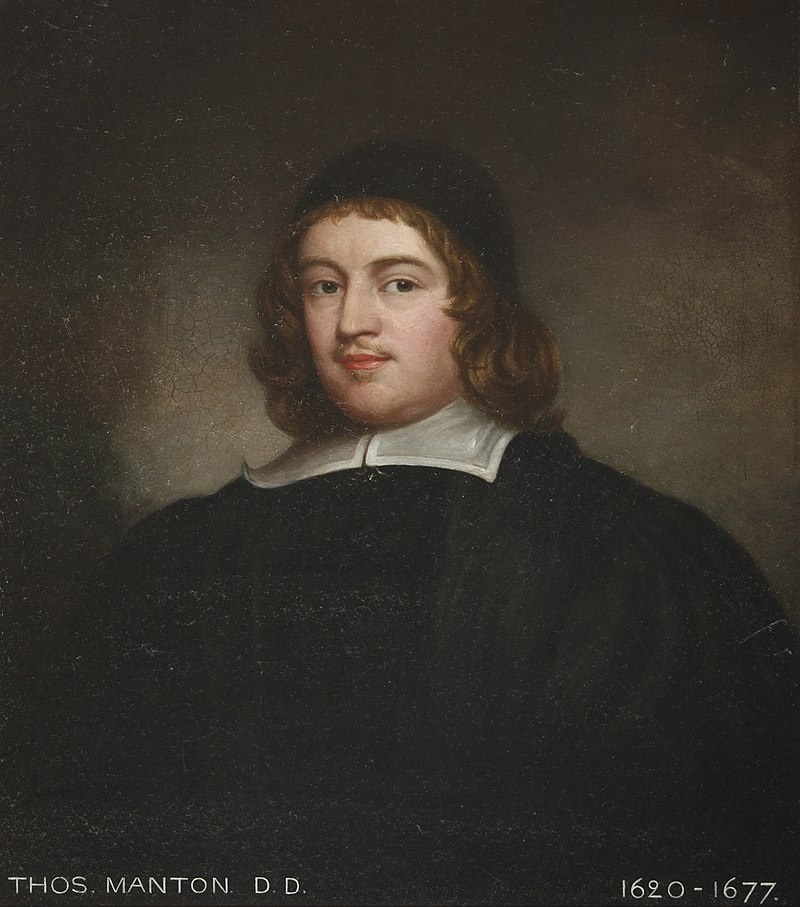
Thomas Manton
https://www.monergism.com/rich-young-ruler-exposition-mark-1017-27-ebook22.1K
Other Quotes from the Author & Topic
The Gospel is temporary, but the law is eternal and is restored precisely through the Gospel. Freedom from the law consists, then, not in the fact that the Christian has nothing more to do with the law, but lies in the fact that the law demands nothing more from the Christian as a condition of salvation. The law can no longer judge and condemn him. Instead he delights in the law of God according to the inner man and yearns for it day and night.
The Law0though the moral law be thus far abolished, it remains as a perpetual rule to believers. Though it be not their Saviour, it is their guide. Though it be not foedus, a covenant of life; yet it is norma, a rule of life. Every Christian is bound to conform to it; and to write, as exactly as he can after this copy. 'Do we then make void the law through faith? God forbid.' Rom iii 31. Though a Christian is not under the condemning power of the law, yet he is under its commanding power.
The Ten Commandments, 44The Law0The Ten Commandments, 44
Besides public ordinances, we should give ourselves to spiritual exercises in secret.
All the time we can spare from our necessary, civil, and natural actions should be employed in calling to mind what we have seen, heard, or felt of God.
Time, Free Time0We are continually thinking of whatsoever we love.
Love causes the soul to be more where it loves than where it lives.
Works 7:479Thinking, Love0Works 7:479
A child of God findeth a greater treasure in one chapter of the Bible than worldly men in all their lands and honours and large revenues.
Scripture, Treasure0You can never part with sin soon enough; it is a cursed inmate, that will surely bring mischief upon the soul that harbours it. It will set its own dwelling on fire.
Works 7:147Sin0Works 7:147
The church is live a river. If it gets wider instead of deeper it will lose its power.
Church0God gave the Spirit to the rest of the apostles, but he gave the purse to the son of perdition.
Money, Holy Spirit0What a man delights in he will be talking of.
Works 7:476Discussion, Talk0Works 7:476
The whole work of sanctification, from its first step to its last period, is all of grace, all must be ascribed to God's free goodness.
Sanctification, Grace0To own and stand up for a hated and despised truth will bring more comfort to our souls than all the pleasure the wicked have in their sensual delights.
Delight, Soul, Truth0The devil seeks to weaken our opinion of God's goodness.
God's Goodness, Satan0To humble us in our converses with God. He is good, but we are evil; he is heaven, but we are hell; he is perfect, but we are poor defective creatures. Therefore in all our approaches to him we should come the more humbly to him, and go the more holy from him; for it is sad when we come to the good God, and are never the better. If we go to the fire, we expect to be warm. Oh! when you come to the fountain of goodness, we should come away better.
https://www.monergism.com/rich-young-ruler-exposition-mark-1017-27-ebookHumility, God's Goodness0The moral teaching of Christ and his apostles is the old law deepened and reapplied to new circumstances--life in the kingdom of God, where the Savior reigns; and in the post-Pentecost era of the Spirit, where God's people are called to live heaven's life among themselves and to be God's counterculture in the world.
Concise Theology, Section 34The Law0Concise Theology, Section 34
As the excellency of his nature giveth him a fitness and a sufficiency for the government of mankind, his creation, preservation, and other benefits give him a full right to make what laws he pleaseth, and to call man to an account whether he hath kept them, yea or no.
Works, Volume 10The Law, Obedience0Works, Volume 10
Christ in fact had not the least intent of making any change or innovation in the precepts of the law. God there appointed once for all a rite of life which he will never repent of... so let us have no more of that error, that here a defect of the law is corrected by Christ; Christ is not to be made into a new law-giver, adding anything to the everlasting righteousness of his Father, but is to be given the attention of a faithful interpreter, teaching us the nature of the law, its object and its scope.
The Law0The more a man delighteth in God, and in the ways of God, the more he cleaveth to Him, and resolveth to go on in this course, and temptations to sensual delights do less prevail.
Delight, Temptation, Lust, Enjoying God0Men are ready to anger, slow to mercy, quickly enflamed, and hardly appeased; but it is quite contrary with God.
Anger, Mercy0Good God, whither is man fallen! First, we practice sin, then defend it, then boast of it. Sin is first our burden, then our custom, then our delight, then our excellency!
Sin0Though we cannot be altogether without sin, yet we must not altogether leave off to resist sin. Sin reigns where it is not resisted.
Sin0It is usual in providence that they who have God's heart should feel God's hand most heavy. I have observed it, that God's children never question His love so much as in sickness. Our thoughts return upon us in such retirement, and the weakness of the body discomposes the mind and deprives us of the free exercise of spiritual reason; to sense and feeling all is sharp.
Sickness0Jewels do not lie upon the surface; you must get into the caverns and dark receptacles of the earth for them. No more do truths lie in the surface and outside of an expression. The beauty and glory of the Scriptures is within and must be fetched out with much study and prayer.
Scripture0The unsoundness of a vessel is not seen when it is empty, but when it is filled with water, then we shall see whether it will leak or not.
Prosperity, Riches1Poverty and pride are most unsuitable. It was one of Solomon's odd sights to see "servants upon horses, and princes walking as servants upon the earth" (Eccl. 10:7). A poor proud man is a prodigy and wonder of pride. He has less temptation to be proud; he has more reason to be humble.
Pride0Prayer is the key by which those mighty ones of God could lock heaven and open it at their pleasure.
Prayer0
Bible Resource
WhoWhatWhere Bible
A level-based Bible challenge, single and multiplayer modes available.
WhoWhatWhere Bible
A level-based Bible challenge, single and multiplayer modes available.
 Special Offer
Top Authors
1. Thomas Watson (196)
2. Charles Spurgeon (135)
3. J.C. Ryle (117)
4. Thomas Brooks (114)
5. John Calvin (108)
6. John Flavel (96)
7. J.I. Packer (95)
8. William Gurnall (93)
9. George Swinnock (89)
10. John Piper (87)
11. John Owen (74)
12. Thomas Manton (70)
13. A.W. Pink (68)
14. Louis Berkhof (63)
15. C.S. Lewis (59)
16. B.B. Warfield (59)
17. Martyn Lloyd-Jones (58)
18. R.C. Sproul (55)
19. Richard Baxter (54)
20. Matthew Henry (54)
2. Charles Spurgeon (135)
3. J.C. Ryle (117)
4. Thomas Brooks (114)
5. John Calvin (108)
6. John Flavel (96)
7. J.I. Packer (95)
8. William Gurnall (93)
9. George Swinnock (89)
10. John Piper (87)
11. John Owen (74)
12. Thomas Manton (70)
13. A.W. Pink (68)
14. Louis Berkhof (63)
15. C.S. Lewis (59)
16. B.B. Warfield (59)
17. Martyn Lloyd-Jones (58)
18. R.C. Sproul (55)
19. Richard Baxter (54)
20. Matthew Henry (54)
Top Topics
1. Sin (243)2. Prayer (187)
3. Scripture (167)
4. Faith (136)
5. Preaching (130)
6. Gospel (112)
7. The Law (111)
8. Suffering (104)
9. Salvation (96)
10. Sabbath (91)
11. Church (86)
12. Christ (82)
13. Grace (74)
14. Justification (64)
15. Law (61)
16. Truth (53)
17. Death (52)
18. Love (51)
19. Holiness (49)
20. Sanctification (48)
21. Children (46)
22. Pride (46)
23. Heaven (45)
24. Obedience (45)
25. Creation (43)
26. Theology (43)