
Quote 652

It is its conviction that there is nothing in us or done by us, at any stage of our earthly development, because of which we are acceptable to God. We must always be accepted for Christ's sake, or we cannot ever be accepted at all. This is not true of us only 'when we believe.' It is just as true after we have believed. It will continue to be true as long as we live. Our need of Christ does not cease with our believing; nor does the nature of our relation to Him or to God through Him ever alter, no matter what our attainments in Christian graces or our achievements in Christian behavior may be. It is always on His blood and righteousness alone that we can rest.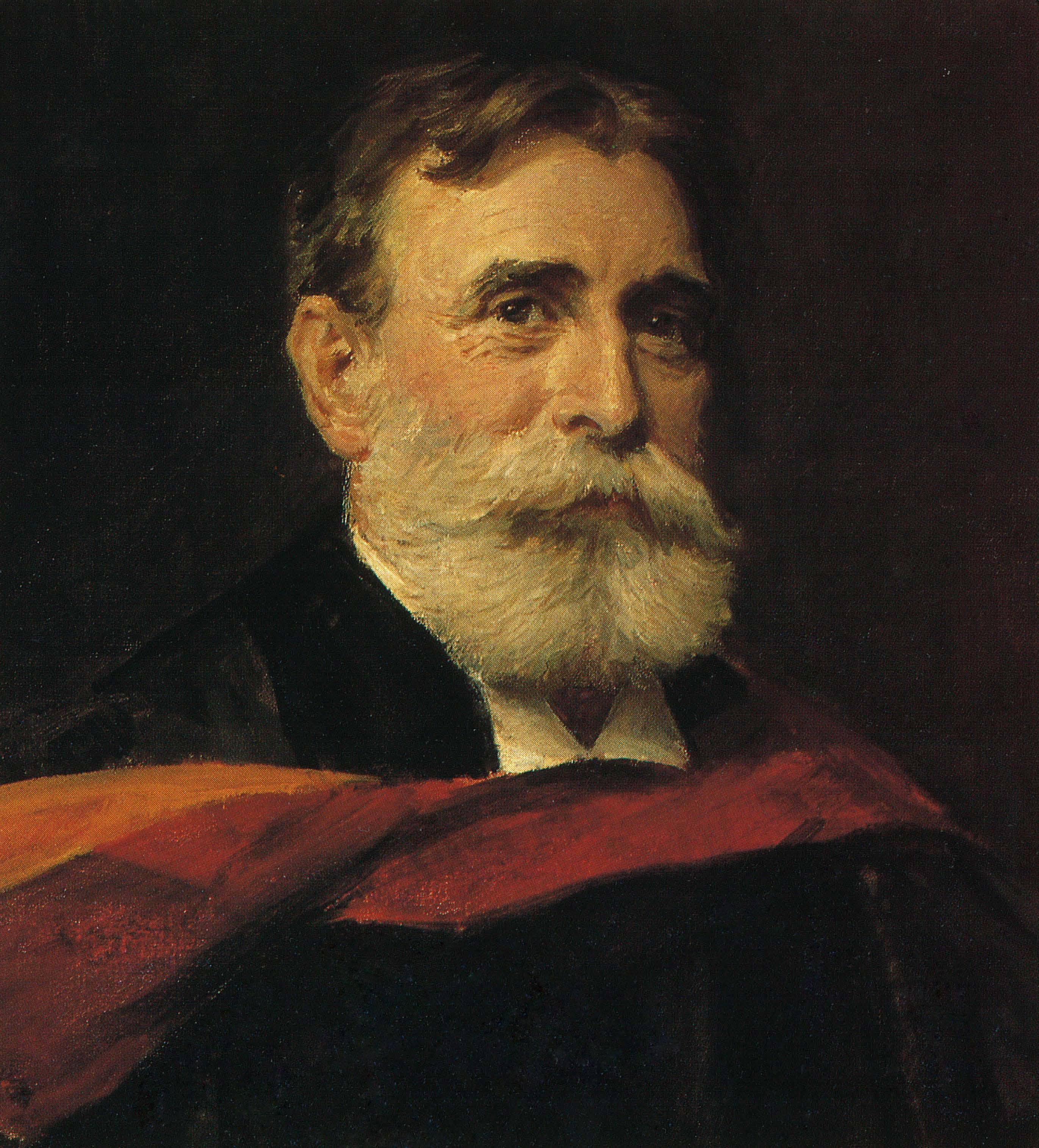
B.B. Warfield
Miserable-Sinner Christianity in the Hands of the Rationalists, chapter III in Perfectionism, Part One, vol. 7 of The Works of Benjamin B. Warfield (New York: Oxford University Press, repr., 2000), 113-11446.7K
Other Quotes from the Author & Topic
This doctrine is the head and the cornerstone. It alone begets, nourishes, builds, preserves, and defends the church of God; and without it the church of God cannot exist for one hour.
What Luther Says: An Anthology Vol 2 (704)Justification0What Luther Says: An Anthology Vol 2 (704)
Jesus Christ is the Prince of Peace, because He takes away sin; and you and I are workers for peace when we preach His Gospel, which is the Gospel of peace just because it is the Gospel of deliverance from sin. Sin means war, and where sin is, there will war be. Righteousness means peace, and
there can never be peace where righteousness has not first been
realized.
Faith and LifePeace, Righteousness, Gospel0Faith and Life
Wherever the knowledge of it is taken away, the glory of Christ is extinguished, religion abolished, the Church destroyed, and the hope of salvation utterly overthrown.
John Calvin: Selections from His Writings (95)Justification0John Calvin: Selections from His Writings (95)
The glory of the incarnation is that it presents to our adoring gaze not a humanized God or a deified man, but a true God-man.
Incarnation0And here we have already exposed the reason why no Christian Church can take up the position recommended to it on the strength of a declaration attributed to Abraham Lincoln. This declaration is to the effect that a simple requirement of love to God and our neighbor constitutes a sufficient foundation for a church, and the churches would profit by making the profession of such love, or of the wish or purpose to cherish such love, their sole qualification for membership. The moment a church took up such a position, however, it would cease to be a Christian Church: the core of Christianity is its provision for salvation from sin.
Christianity, Church, Salvation, Sin0For the Reformation is nothing other than Augustianianism come to its rights: the turning away from all that is human to rest on God alone for salvation.
Reformation0A firm faith in the universal providence of God is the solution of all earthly problems. It is almost equally true that a clear and full apprehension of the universal providence of God is the solution of most theological problems.
Providence0A glass window stands before us. We raise our eyes and see the glass; we note its quality, and observe its defects; we speculate on its composition. Or we look straight through it on the great prospect of land and sea and sky beyond. So there are two ways of looking at the world. We may see the world and absorb ourselves in the wonder of nature. That is the scientific way. Or we may look right through the world and see God behind it . That is the religious way.
Selected Shorter Writings - INature, Science, Theology0Selected Shorter Writings - I
Justification is a judicial act of God, in which He declares, on the basis of the righteousness of Jesus Christ, that all the claims of the law are satisfied with respect to the sinner.
Systematic Theology, 513Justification0Systematic Theology, 513
God's breath is the irresistible outflow of His power. When Paul declares, then, that "every scripture," or "all scripture" is the product of the Divine breath, "is God-breathed," he asserts with as much energy as he could employ that Scripture is the product of a specifically Divine operation.
Inspiration and Authority of the Bible, Section 2Inspiration, Scripture0Inspiration and Authority of the Bible, Section 2
"concursive operation."... It has been common to speak of the Spirit's action in this form of revelation, therefore, as an assistance, a superintendence, a direction, a control, the meaning being that the effect aimed at --the discovery and enunciation of Divine truth --is attained through the action of the human powers --historical research, logical reasoning, ethical thought, religious aspiration --acting not by themselves, however, but under the prevailing assistance, superintendence, direction, control of the Divine Spirit.
Inspiration and Authority of the Bible, Ch 1Revelation, Reason, Holy Spirit0Inspiration and Authority of the Bible, Ch 1
The whole nomenclature of prophecy presupposed, indeed, its vision-form. Prophecy is distinctively a word, and what is delivered by the prophets is proclaimed as the "word of Jehovah."
Inspiration and Authority of the Bible, Ch 1Prophecy0Inspiration and Authority of the Bible, Ch 1
If we are to hold to nothing that is questioned, we shall hold to nothing at all: we shall be as beasts which are beyond good and evil.
Doctrine, Systematic Theology, Truth, Skepticism0A beginning was made already in the eighth century of translating the Bible into the vernacular languages, and by the end of the Middle Ages it was accessible to Frenchmen and Germans, Englishmen and Bohemians, Spaniards and Italians and Poles in their own tongues.
The Bible the Book of MankindMiddle Ages, 8th Century, Bible Translation0The Bible the Book of Mankind
It was no accident that the Christian Bible was a Greek Bible. Greek was at the time the lingua franca of the civilized world, and the universal gospel naturally clothed itself in this world-tongue.
The Bible the Book of MankindScripture, Greeks, Language0The Bible the Book of Mankind
the Article of justification is the Master and the prince, the lord, the ruler, and judge, over all the kinds of doctrine, which preserves and governs the entire church doctrine and sets up our conscience in the sight of God.
Justification0A firm faith in the universal providence of God is the solution of all earthly troubles.
Providence0Where the Spirit is, there is the church; outside the body of the saints there is no salvation.
Church, Salvation0[General and Special Revelation] The one is addressed generally to all intelligent creatures, and is therefore accessible to all men; the other is addressed to a special class of sinners, to whom God would make known His salvation. The one has in view to meet and supply the natural need of creatures for knowledge of their God; the other to rescue broken and deformed sinners from their sin and its consequences
Revelation and Inspiration p.6Revelation0Revelation and Inspiration p.6
Let us remember that our justification means not only that our sins are forgiven and that we have been declared to be righteous by God Himself, not merely that we were righteous at that moment when we believed, but permanently righteous.
Spiritual Depression (74)Justification0Spiritual Depression (74)
Therefore, the hope of justification must not be placed in them, but in faith alone: we account a man to be justified by faith, without the works of the law (Rom 3:28).
Commentary on 1 TimothyJustification0Commentary on 1 Timothy
Justification finds men ungodly, though it do not leave them so.
Justification0There is a twofold evil in sin, the guilt of it and the pollution of it. Justification properly cures the former, sanctification the latter; but both justification and sanctification flow unto sinners out of the death of Christ. And though it is proper to say the Spirit sanctifies, yet, it is certain, it was the blood of Christ that procured for us the Spirit of sanctification. Had not Christ died, the Spirit had never come down from heaven upon any such design.
Justification0The work of God's mercy in justifying a soul is to take him off from himself, to unbottom him, and to make him see and be sensible of his own unrighteousness and uncleanness. This is a great and mighty work of God's mercy.
Saints TreasuryJustification0Saints Treasury
No doubt it requires some effort whether to teach or to learn the Shorter Catechism. It requires some effort whether to teach or to learn the grounds of any department of knowledge. Our children — some of them at least — groan over even the primary arithmetic and find sentence-analysis a burden. Even the conquest of the art of reading has proved such a task that 'reading without tears' is deemed an achievement. We think, nevertheless, that the acquisition of arithmetic, grammar and reading is worth the pains it costs the teacher to teach, and the pain it costs the learner to learn them. Do we not think the acquisition of the grounds of religion worth some effort, and even, if need be, some tears?
https://www.apuritansmind.com/westminster-standards/is-the-shorter-catechism-worth-while/Children, Catechism0
Bible Resource
WhoWhatWhere Bible
A level-based Bible challenge, single and multiplayer modes available.
WhoWhatWhere Bible
A level-based Bible challenge, single and multiplayer modes available.
 Special Offer
Top Authors
1. Thomas Watson (196)
2. Charles Spurgeon (135)
3. J.C. Ryle (117)
4. Thomas Brooks (114)
5. John Calvin (108)
6. J.I. Packer (97)
7. John Flavel (96)
8. William Gurnall (93)
9. George Swinnock (89)
10. John Piper (87)
11. John Owen (74)
12. Thomas Manton (70)
13. A.W. Pink (68)
14. Louis Berkhof (63)
15. C.S. Lewis (59)
16. B.B. Warfield (59)
17. Martyn Lloyd-Jones (58)
18. R.C. Sproul (55)
19. Richard Baxter (54)
20. Matthew Henry (54)
2. Charles Spurgeon (135)
3. J.C. Ryle (117)
4. Thomas Brooks (114)
5. John Calvin (108)
6. J.I. Packer (97)
7. John Flavel (96)
8. William Gurnall (93)
9. George Swinnock (89)
10. John Piper (87)
11. John Owen (74)
12. Thomas Manton (70)
13. A.W. Pink (68)
14. Louis Berkhof (63)
15. C.S. Lewis (59)
16. B.B. Warfield (59)
17. Martyn Lloyd-Jones (58)
18. R.C. Sproul (55)
19. Richard Baxter (54)
20. Matthew Henry (54)
Top Topics
1. Sin (244)2. Prayer (187)
3. Scripture (167)
4. Faith (136)
5. Preaching (130)
6. Gospel (112)
7. The Law (111)
8. Suffering (104)
9. Salvation (96)
10. Sabbath (91)
11. Church (86)
12. Christ (82)
13. Grace (74)
14. Justification (64)
15. Law (61)
16. Truth (53)
17. Death (52)
18. Love (51)
19. Holiness (49)
20. Sanctification (48)
21. Children (46)
22. Pride (46)
23. Heaven (45)
24. Obedience (45)
25. Creation (43)
26. Theology (43)